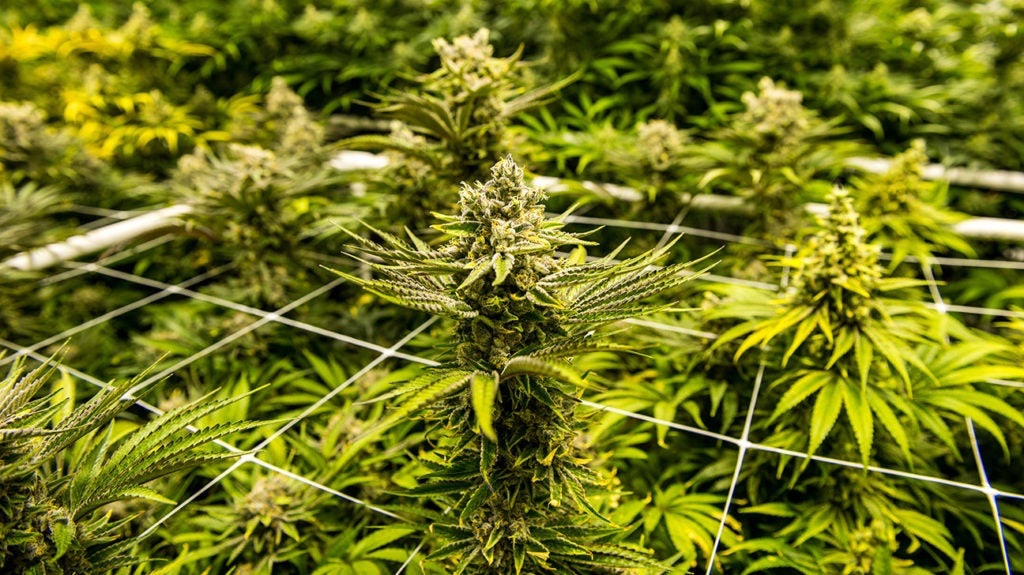
When most people think about cannabis, they focus on THC and CBD, the primary cannabinoids responsible for the plant’s psychoactive and therapeutic effects. But cannabis is far more complex. Two other groups of compounds, terpenes and flavonoids, play a crucial role in shaping the experience of each strain. These compounds influence the aroma, flavor, and effects of cannabis, and understanding their role can help consumers make better-informed choices.
What Are Terpenes?
Terpenes are aromatic compounds found in cannabis and many other plants. They give cannabis its distinct smell and taste, from citrusy and piney to earthy and floral. Beyond their sensory appeal, terpenes contribute to the effects of a strain by interacting with cannabinoids and influencing how they interact with our bodies.
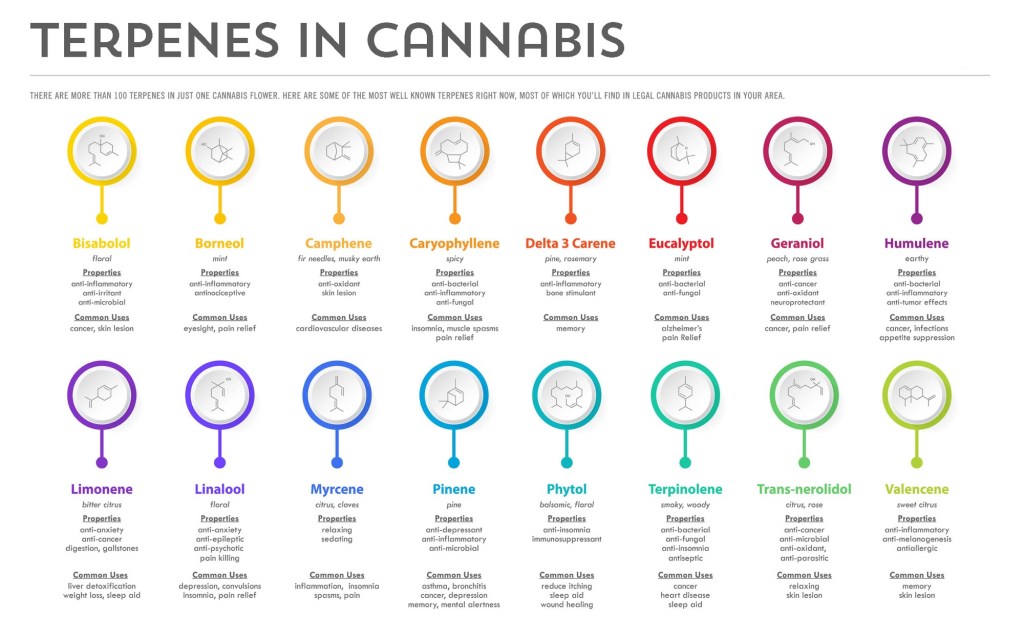
Common Terpenes in Cannabis
• Myrcene – Found in mangoes and hops, myrcene gives off an earthy, musky scent. It is known for its sedative effects, which contribute to the couch-lock feeling associated with some indica strains.
• Limonene – As the name suggests, limonene has a strong citrus aroma. It is thought to have mood-enhancing and anti-anxiety properties, making it common in uplifting strains.
• Pinene – Found in pine needles and rosemary, pinene has a fresh, woodsy scent. It is known for its alertness-boosting effects and may also help with respiratory function.
• Linalool – The same terpene found in lavender, linalool has a floral aroma and is known for its calming and stress-relieving effects.
• Caryophyllene – This terpene has a spicy, peppery scent and is unique because it can also interact with CB2 receptors, potentially offering anti-inflammatory and pain-relief benefits.
Why Terpenes Matter
Terpenes do more than just create different scents and flavors, they play a direct role in how a strain makes you feel. A strain high in limonene and pinene may feel energizing, while one rich in myrcene and linalool might promote deep relaxation.
This interaction between terpenes and cannabinoids is known as the entourage effect, where compounds work together to enhance each other’s effects. This is why two strains with the same THC percentage can feel completely different, terpenes make the difference.
What Are Flavonoids?
Flavonoids are lesser-known compounds in cannabis, but they play an essential role in the plant’s color, flavor, and medicinal properties. They are responsible for the deep purples, reds, and blues seen in some strains, as well as contributing to antioxidant and anti-inflammatory effects.

Types of Flavonoids in Cannabis
• Cannaflavins A, B, and C – Unique to cannabis, these flavonoids are being studied for their anti-inflammatory properties, which may be even stronger than aspirin.
• Quercetin – A common flavonoid found in fruits and vegetables, quercetin has antioxidant properties that support the immune system and heart health.
• Kaempferol – Known for its neuroprotective and anti-cancer potential, kaempferol is found in cannabis as well as in leafy greens.
• Apigenin – Found in chamomile tea, apigenin has calming effects and may contribute to cannabis strains that help with relaxation and sleep.
The Role of Flavonoids in Cannabis
Flavonoids work alongside terpenes and cannabinoids, contributing to the entourage effect. They also help give cannabis its vibrant colors, with anthocyanins responsible for the deep purple hues in strains like Purple Punch and Granddaddy Purple.
Beyond aesthetics, flavonoids have been studied for their potential in reducing inflammation, protecting brain cells, and fighting oxidative stress, which could have implications for conditions like Alzheimer’s disease and cancer.
The Entourage Effect: Why Full-Spectrum Cannabis Matters
The entourage effect suggests that cannabis works best when all its natural compounds, cannabinoids, terpenes, and flavonoids, work together. This is why full-spectrum products (which retain all these compounds) are often considered more effective than isolates (pure THC or CBD).
For example:
• A strain high in caryophyllene and cannaflavins may be particularly effective for pain relief due to their combined anti-inflammatory effects.
• A strain with limonene and quercetin might provide a more uplifting experience, while also supporting immune health.
This is why choosing a strain based on terpene and flavonoid content, rather than just THC percentage, can lead to a more tailored cannabis experience.
Why This Matters for Consumers
As cannabis legalization spreads, consumers are becoming more educated about what makes each strain unique. Instead of focusing only on THC levels, paying attention to terpenes and flavonoids can help people find the right strain for their needs.
If you’re looking for energy and focus, a strain high in pinene and limonene might be the best choice. If you want deep relaxation, look for strains with myrcene and linalool. Understanding flavonoids can also help consumers appreciate the therapeutic potential of full-spectrum cannabis.
The future of cannabis is about more than just getting high, it’s about unlocking the full potential of this incredible plant.
Sources
• Russo, E. B. (2011). “Taming THC: potential cannabis synergy and phytocannabinoid-terpenoid entourage effects.” British Journal of Pharmacology, 163(7), 1344-1364. https://bpspubs.onlinelibrary.wiley.com/doi/full/10.1111/j.1476-5381.2011.01238.x
• Andre, C. M., Hausman, J. F., & Guerriero, G. (2016). “Flavonoids in Cannabis sativa: biosynthesis and bioactivities.” Phytochemistry Reviews, 15(3), 497-521. https://pubmed.ncbi.nlm.nih.gov/33681553/
• Booth, J. K., Page, J. E., & Bohlmann, J. (2017). “Terpene synthases from Cannabis sativa.” PLOS ONE, 12(3), e0173911. https://journals.plos.org/plosone/article?id=10.1371/journal.pone.0173911
 COUCH LOCK’D